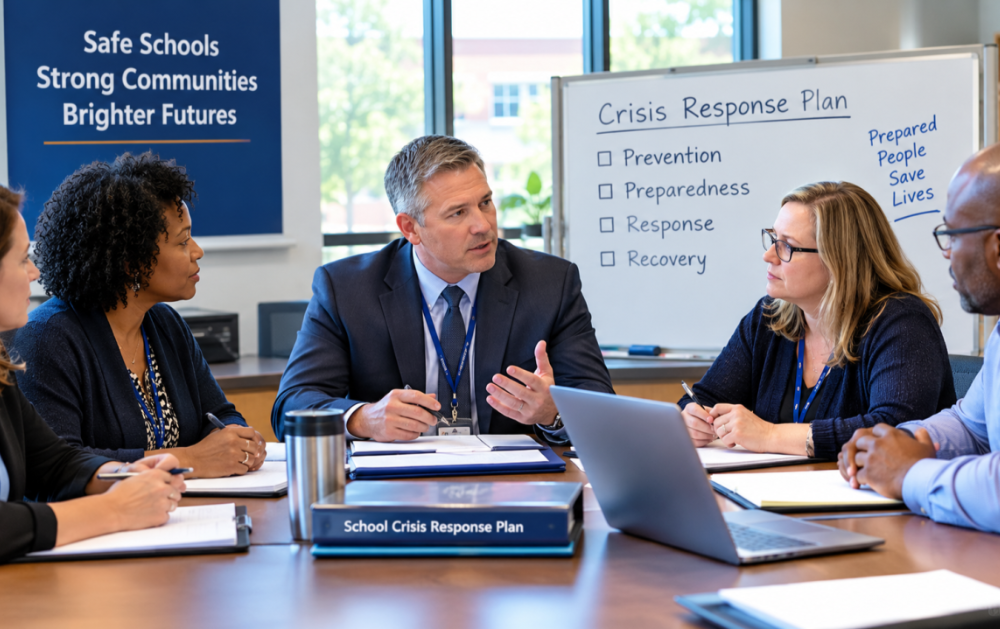
A school can have a crisis plan, trained personnel, and established safety procedures—and still be unprepared when a crisis occurs.
The real test comes when information is incomplete, circumstances change, and administrators must make decisions that affect the safety and well-being of their school community.
Who takes charge? How will information be verified and communicated? Do staff members understand their responsibilities? And what happens after the immediate crisis has passed?
These are not questions school leaders should be answering for the first time during an emergency.
Effective school crisis response requires more than written procedures. It requires prepared leadership, coordinated action, clear communication, and a plan for recovery.
For school administrators, crisis management is not simply an operational responsibility. It is a leadership responsibility.
What Is a Crisis in a School Setting?
A crisis is an event or situation that significantly disrupts normal functioning, overwhelms available coping resources, or requires coordinated action to protect safety and support recovery.
School crises may include:
- The death of a student, teacher, or staff member.
- A suicide or suicide attempt.
- Violence, credible threats, or other serious safety concerns.
- Severe accidents or medical emergencies.
- Natural disasters and other community emergencies.
- Traumatic events that affect students, staff, or families.
- Events outside the school that significantly disrupt the school community.
Not every crisis presents the same challenges. Some require immediate emergency intervention, while others primarily involve psychological support, communication, and restoring stability.
The circumstances may differ, but effective leadership requires an understanding of the situation, the needs of those affected, and the actions necessary to move forward.
Key takeaway: A crisis must be understood in terms of its impact, the risks it presents, and the support required—not simply the event that triggered it.
Why Schools Need an Effective Crisis Response Plan
A school crisis response plan should do more than document procedures. It should establish how people, responsibilities, communication, and resources come together when normal operations are disrupted.
For administrators, an effective plan helps:
- Establish clear leadership authority and responsibilities.
- Reduce confusion and conflicting instructions.
- Coordinate communication with staff, families, and relevant agencies.
- Identify immediate safety and operational priorities.
- Connect students and staff with appropriate support.
- Establish procedures for follow-up and recovery.
For teachers and other school personnel, the plan should clarify expectations, identify who can provide direction, and explain how to raise concerns or request assistance.
However, having a plan does not necessarily mean an organization is prepared to use it effectively.
A plan that has not been communicated, practiced, and evaluated may fail to provide the direction staff need when circumstances become unpredictable.
Plans create structure. Prepared leadership turns that structure into action.
The Real Test of School Crisis Preparedness
How can administrators determine whether their school is prepared to respond effectively?
The answer is not found solely in a written plan or a checklist of completed requirements. Leaders must evaluate whether people can carry out their responsibilities under realistic conditions.
Appropriate exercises, tabletop discussions, and scenario-based practice can help schools identify gaps before an actual crisis exposes them.
Administrators should periodically assess whether:
- Staff understand their assigned roles and responsibilities.
- Decision-making authority is clearly established.
- Communication procedures work as intended.
- Relevant personnel can coordinate effectively with emergency responders and outside agencies.
- Teachers know how to report concerns and request assistance.
- Leadership can adapt when new information changes the situation.
- Identified weaknesses result in corrective action and follow-up.
Exercises should reflect the school's circumstances and the responsibilities of the people participating. Their purpose is not simply to demonstrate that a plan exists. It is to identify what works, what does not, and what needs improvement.
Following an exercise, leaders should document significant findings, assign responsibility for corrective actions, and establish a process for reviewing progress.
The real test of preparedness is not whether a school has a crisis plan, but whether its leaders and staff can apply it, coordinate their responsibilities, and make sound decisions when circumstances change.
Where School Crisis Response Can Break Down
A school may have a comprehensive crisis plan, designated response teams, and established communication procedures. Yet those measures do not automatically guarantee an effective response.
Problems often emerge when written procedures meet the realities of a fast-moving situation.
1. Unclear Leadership and Responsibilities
When staff members do not know who has decision-making authority, important actions can be delayed, duplicated, or overlooked.
Administrators should establish who is responsible for coordinating the response, communicating decisions, managing operational needs, and connecting affected individuals with appropriate support.
Responsibilities should be understood before a crisis occurs.
2. Inconsistent Communication
Conflicting messages can create uncertainty among staff, students, and families.
Information may circulate through informal conversations and social media before the school has verified the facts. In these circumstances, silence can leave an information vacuum, while premature communication can spread inaccurate information.
School leaders need a process for verifying information, determining what can appropriately be shared, and communicating updates through designated channels.
The objective is not to have every answer immediately. It is to communicate what is known, acknowledge what remains uncertain, and explain when further information will be provided.
3. Inadequate Preparation
A written plan may appear comprehensive without having been adequately tested.
Staff may be unfamiliar with their assigned responsibilities, administrators may not have practiced coordinating decisions, and communication procedures may not work as expected.
Exercises and scenario-based discussions can help identify these gaps before an actual crisis exposes them.
Preparedness should be evaluated by what people can do, not simply by whether documentation exists.
4. Overlooking Staff Needs
Teachers are often expected to maintain classroom stability while managing their own reactions to a traumatic event.
Without clear guidance and appropriate support, staff may struggle to respond consistently to student concerns while also handling their regular responsibilities.
Administrators should consider what teachers need to function effectively, including timely information, realistic expectations, access to appropriate support, and opportunities to raise concerns.
5. Treating Recovery as an Afterthought
The immediate incident may end before its effects on the school community have subsided.
Students may experience continuing distress. Staff may struggle with concentration, sleep, or emotional regulation. Families may have concerns that emerge days or weeks later.
A response that focuses exclusively on immediate operations can overlook these ongoing needs.
Recovery planning should establish how the school will monitor concerns, coordinate support, restore normal operations when appropriate, and evaluate the effectiveness of its response.
Key takeaway: A crisis plan establishes expectations. Effective leadership ensures those expectations translate into coordinated action before, during, and after an incident.
Prevention, Response, and Recovery: Three Connected Leadership Responsibilities
School crisis management is most effective when prevention, response, and recovery are treated as connected responsibilities rather than separate activities.
Each requires different actions, but weaknesses in one area can affect the others.
Prevention: Recognize and Address Concerns Early
Prevention begins before an incident occurs.
School leaders should ensure that personnel understand how to report safety concerns, that concerning behavior receives appropriate attention, and that established procedures connect people with the resources needed to assess and address potential risks.
This includes reviewing reporting processes, supporting behavioral threat assessment when warranted, identifying organizational vulnerabilities, and ensuring that staff know how to raise concerns.
Prevention does not mean predicting every possible incident. It means creating processes that help schools recognize concerns and respond appropriately before situations deteriorate.
Administrators should also examine whether staff members feel able to report concerns without fear of retaliation or being dismissed.
A reporting procedure is only effective if people understand it, trust the process, and believe their concerns will receive appropriate consideration.
Response: Establish Direction and Coordinate Action
When a crisis occurs, leadership must help the school move from uncertainty to organized action.
Depending on the situation, priorities may include:
- Protecting students, staff, and visitors.
- Activating appropriate emergency or crisis procedures.
- Establishing decision-making authority.
- Coordinating with emergency responders and relevant agencies.
- Communicating verified information.
- Providing direction to teachers and other personnel.
- Connecting affected individuals with appropriate support.
Not every crisis requires the same response. Leaders must assess the circumstances, determine immediate priorities, and adapt as information changes.
Recovery: Support the School Community and Learn From the Experience
Recovery begins when immediate needs are addressed, but it may continue long after normal operations resume.
Administrators should consider the ongoing needs of students, staff, and families while determining how and when to restore regular activities.
Recovery responsibilities may include coordinating professional support, monitoring changes in student and staff functioning, adjusting expectations where appropriate, and communicating information about available resources.
Leaders should also review the response.
What worked as intended? Where did communication break down? Were responsibilities clear? Did personnel have the information and resources they needed? What should change before another crisis occurs?
These questions turn experience into practical improvements.
Key takeaway: Prevention helps address concerns before they escalate. Response establishes direction during disruption. Recovery supports stability and strengthens future preparedness.
Emergency Response and Psychological Recovery Are Not the Same
Emergency response and psychological recovery are connected, but they serve different purposes and require different areas of expertise.
Emergency procedures address immediate safety, operational priorities, and coordination. Depending on the incident, these responsibilities may involve school administrators, emergency responders, law enforcement, and other designated personnel.
Psychological recovery involves recognizing ongoing needs, connecting affected individuals with appropriate professional support, and monitoring concerns over time.
Students and staff may experience emotional, behavioral, or physical reactions following a crisis. Some will recover with the support of their usual networks and routines. Others may need additional assistance from qualified mental health professionals.
School leaders do not need to diagnose these reactions. They do need to ensure that staff understand how to recognize concerns, follow appropriate referral procedures, and connect people with suitable resources.
Leadership brings these responsibilities together without confusing their purposes or expecting educators to assume the roles of emergency responders or mental health professionals.
Key takeaway: Effective crisis management addresses both immediate safety and longer-term recovery while respecting the distinct responsibilities of the people involved.
Understanding Student Reactions Following a Crisis
Students can react to a crisis in different ways depending on their age, developmental stage, relationship to the event, previous experiences, and available support.
Some may express their feelings openly. Others may withdraw, become unusually quiet, or appear unaffected.
Possible reactions include:
- Shock, numbness, or confusion.
- Anxiety, fear, or heightened vigilance.
- Sadness, irritability, or mood changes.
- Difficulty concentrating or completing schoolwork.
- Changes in sleep or other daily routines.
- Regression in younger children.
- Withdrawal from peers or usual activities.
- Behavioral changes, including increased frustration or aggression.
These reactions do not necessarily indicate that a student has developed a mental health disorder. They may be understandable responses to a distressing experience.
However, persistent, worsening, or severe symptoms warrant appropriate attention.
School leaders should ensure that teachers understand how to recognize changes in student functioning, document and communicate concerns through established procedures, and refer students to qualified professionals when appropriate.
Support should be responsive to the individual student rather than based on an assumption that everyone will react or recover in the same way.
Key takeaway: Recognizing changes early helps schools provide appropriate support and identify students who may need additional assistance.
How Teachers and Staff May Be Affected
Teachers and school personnel are part of the affected community. They may experience the same uncertainty, distress, and disruption as the students they are expected to support.
Possible reactions include:
- Difficulty concentrating or organizing tasks.
- Trouble making decisions.
- Emotional detachment or difficulty processing the event.
- Anxiety, sadness, or irritability.
- Sleep disruption and fatigue.
- Reduced confidence or work performance.
- Difficulty maintaining normal classroom routines.
These reactions may affect how staff communicate, make decisions, and respond to student needs.
Administrators should avoid assuming that every employee will respond in the same way or on the same timeline.
Instead, leadership should provide clear information, establish realistic expectations, make appropriate support available, and encourage staff to communicate when they need assistance.
Supporting staff is not separate from supporting students. Teachers who receive appropriate guidance and support are better positioned to maintain classroom stability.
What Should Teachers Do After a School Crisis?
Teachers play an important role in helping students regain a sense of stability. However, they should not be expected to function as mental health professionals or manage serious concerns independently.
Following an incident, teachers should:
1. Communicate accurate information. Share information that has been verified and approved for communication. Avoid speculation and respect applicable privacy requirements.
2. Maintain predictable routines when appropriate. Familiar classroom structures can help students regain a sense of normality, provided the routines are suitable for the circumstances.
3. Acknowledge students' reactions. Allow students to express concerns without pressuring them to discuss personal feelings or experiences.
4. Follow established school procedures. Know how to contact administrators, counselors, crisis teams, and other designated personnel.
5. Coordinate with colleagues. Share relevant concerns through appropriate channels and follow agreed-upon guidance.
6. Monitor changes in student behavior. Pay attention to persistent distress, withdrawal, academic difficulties, or other meaningful changes.
7. Refer concerns appropriately. Seek assistance when a student appears to need additional support, particularly when there are concerns about safety or significant deterioration in functioning.
8. Recognize their own support needs. Teachers should know what resources are available to them and how to access assistance.
Group discussions may be useful when appropriately planned and facilitated, but students should not be pressured to disclose personal experiences. Activities should reflect students' needs, developmental levels, and the nature of the incident.
Key takeaway: Teachers help stabilize the classroom, but administrators must establish the system that supports them.
When Should Students Be Referred for Additional Support?
School personnel should follow established referral procedures when a student's reactions raise concerns about safety, functioning, or recovery.
Potential indicators include:
- Persistent or worsening emotional distress.
- Significant withdrawal from peers or normal activities.
- Continuing difficulty concentrating or participating in school.
- Marked changes in behavior or daily functioning.
- Signs of significant difficulty with sleep or self-care.
- Statements suggesting hopelessness or thoughts of self-harm.
- Threats or statements indicating a potential risk of harm to others.
These indicators should be considered in context. No single behavior automatically establishes a diagnosis or determines the level of risk.
When immediate safety concerns arise, school personnel should follow applicable emergency and safeguarding procedures without delay.
Other concerns may require consultation with school counselors, mental health professionals, or appropriate outside providers.
The goal is to ensure that concerns receive timely, proportionate, and appropriate attention rather than leaving teachers to determine independently what a student needs.
Key takeaway: Clear referral procedures help schools identify concerns and connect students with appropriate assessment, intervention, and support.
Questions School Administrators Should Ask About Crisis Preparedness
Administrators can evaluate their readiness by looking beyond the existence of a written plan.
Consider the following questions:
- Do staff members understand their roles during a crisis?
- Is decision-making authority clearly established?
- Can the school communicate verified information promptly and consistently?
- Have relevant procedures been practiced under realistic conditions?
- Do teachers know how to request assistance for distressed students?
- Are staff support needs included in the crisis response process?
- Are responsibilities for follow-up and recovery clearly assigned?
- Does the school evaluate incidents and exercises to identify opportunities for improvement?
- Can personnel raise concerns without fear of retaliation or dismissal?
The answers can reveal gaps that may not be apparent from reviewing written policies alone.
Frequently Asked Questions About School Crisis Response
What should school administrators do immediately after a crisis?
Administrators should address immediate safety concerns, activate the appropriate response procedures, establish leadership responsibilities, coordinate with relevant emergency responders and support personnel, and communicate verified information. Actions should reflect the nature and severity of the incident.
What is the difference between school crisis management and crisis response?
School crisis management encompasses prevention, preparedness, response, and recovery. Crisis response refers more specifically to the actions taken during and immediately following a disruptive event. Effective crisis management connects these activities into a coordinated approach.
How can administrators support teachers after a traumatic incident?
Administrators can provide clear information, establish realistic expectations, maintain appropriate communication, make professional support available, and clarify how teachers should respond to student concerns. Staff should not be expected to manage serious psychological or safety concerns alone.
What information should schools share with families after a crisis?
Schools should communicate verified information about the situation, relevant safety measures, operational changes, and available support. Communication should respect privacy, applicable legal requirements, and any ongoing emergency or investigative considerations.
How can schools determine whether students are recovering?
Administrators and appropriate support personnel can monitor changes in student functioning, including participation, concentration, behavior, social engagement, and the ability to resume usual activities. Persistent or worsening concerns may indicate a need for additional support. Recovery should not be judged by a single measure or a fixed timeline.
What makes a school crisis response plan effective?
An effective plan establishes clear responsibilities, communication procedures, coordination arrangements, relevant emergency protocols, access to support resources, and recovery processes. Regular practice and review help determine whether personnel can apply the plan under realistic conditions.
Leadership Takeaways: Preparedness Must Translate Into Action
A school crisis tests more than policies, procedures, and emergency protocols. It tests whether leaders can translate preparedness into action when information is incomplete, circumstances are changing, and decisions have real consequences for people and the organization.
The critical question is not simply whether a school has established procedures. It is whether leaders understand what those procedures require, whether staff can carry them out, and whether the organization can recognize and address gaps before another crisis occurs.
Several principles deserve particular attention:
- Leadership establishes direction. Staff need clear responsibilities and timely guidance.
- Communication reduces uncertainty. Verified, consistent information helps prevent confusion and misinformation.
- Preparedness requires practice. A written plan is not proof that an organization can execute it.
- Prevention and response are connected. Effective systems recognize concerns, establish appropriate action, and support recovery.
- Staff support matters. Teachers need guidance and resources to help students effectively.
- Recovery requires follow-through. The end of an immediate incident does not necessarily mean the end of its effects.
- Continuous improvement strengthens readiness. Reviewing decisions and identifying gaps helps schools prepare for future challenges.
Ultimately, effective crisis leadership is not measured solely by how a school responds during an incident. It is also reflected in how well the organization prepared beforehand, supported its people during the disruption, and learned from the experience afterward.
A crisis plan provides direction. Leadership, preparation, and coordinated action determine how effectively that direction is carried out.
Strengthening School Safety and Crisis Preparedness
School administrators should periodically evaluate whether their existing policies, reporting procedures, and crisis response plans translate into coordinated action.
This includes examining leadership responsibilities, communication processes, staff preparedness, behavioral risk recognition, and the systems that support students and employees following a disruptive event.
Explore our School Safety Plan and District Preparedness resources to learn more about strengthening school safety planning and preparedness.
Risk Mitigation Technologies LLC provides independent security consulting and advisory services focused on behavioral threat assessment, workplace violence prevention, preparedness, and defensible decision-making.
Is your school or district confident that its crisis response procedures will work when they are needed most?
If you are evaluating preparedness, identifying gaps, or seeking an independent perspective on your school's safety and response procedures, contact Risk Mitigation Technologies LLC to discuss your needs.
About the Author
Joseph Paul Manley, M.A., is an independent security consultant and executive risk advisor specializing in behavioral threat assessment, workplace violence prevention, crisis preparedness, and defensible decision-making.
As Founder and Principal Consultant of Risk Mitigation Technologies LLC, Manley helps organizational leaders recognize behavioral risks, reduce uncertainty, and make informed decisions before concerns escalate into serious incidents or organizational disruption.
Drawing on more than 35 years of experience spanning law enforcement leadership, federal protection, investigations, emergency response, and higher education, he developed Clarity Before Crisis™, a prevention-focused approach to recognizing risk and improving leadership decisions under uncertainty.
His work emphasizes practical preparedness, coordinated response, and organizational accountability.
Next Step
Bring behavioral threat assessment clarity to your organization.
Risk Mitigation Technologies works with leadership teams to build recognition, reporting, and decision pathways that hold up under scrutiny.